
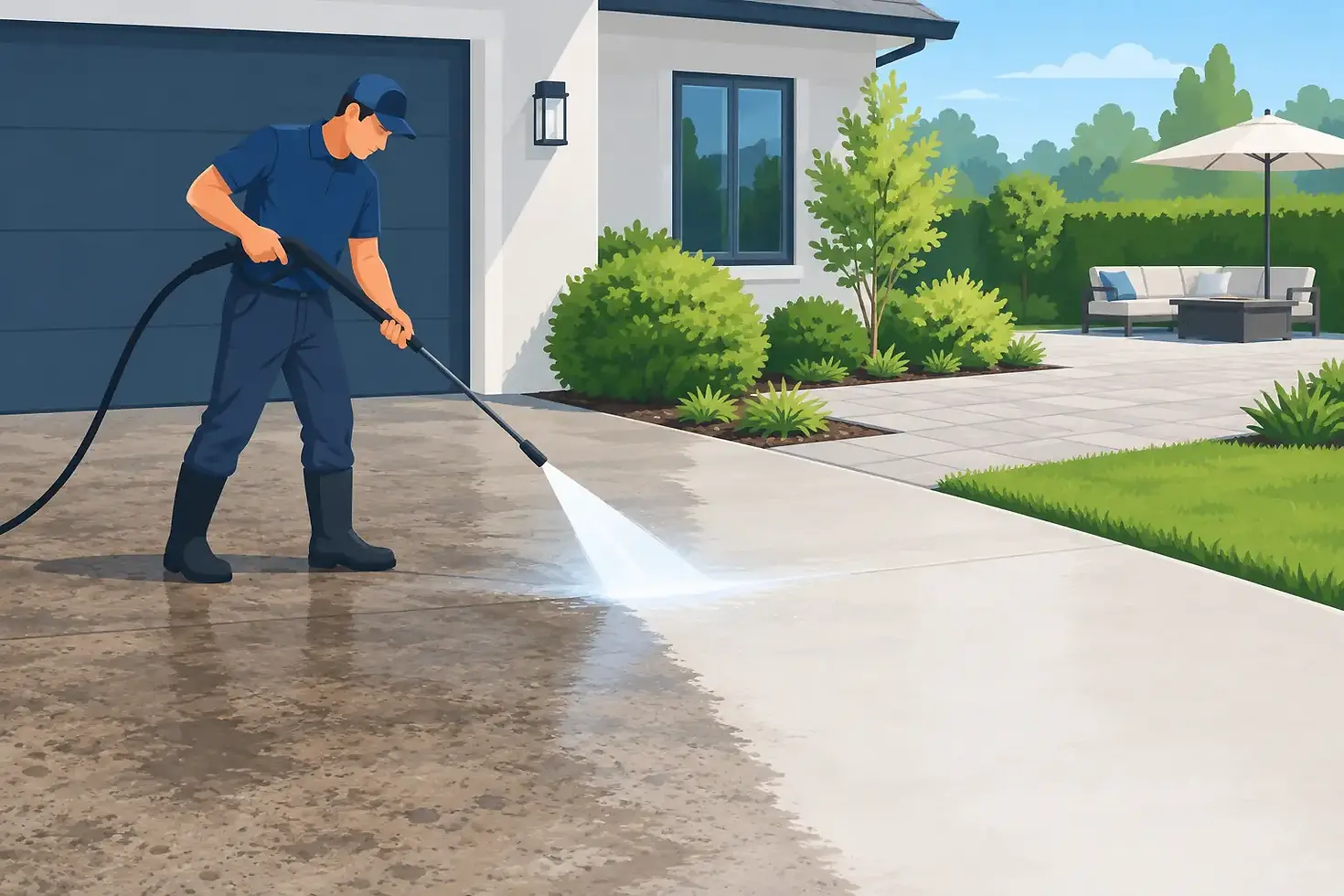
Power Washing for Driveways, Patios, and Walkways
Power washing can make a driveway or patio look years younger in a single service visit, but the real value is not just the clean appearance. Removing dirt, algae, salt residue, and organic buildup helps property owners see the true condition of the surface underneath. That matters when planning repairs, sealing, or regular upkeep.
For homeowners across the Greater Toronto Area, exterior surfaces take a steady beating. Winter salt, freeze-thaw cycles, vehicle traffic, shade, rain, and falling leaves all leave their mark. A properly cleaned driveway, walkway, patio, or interlock area is easier to inspect, safer to use, and better prepared for protective maintenance.
What Power Washing Removes From Exterior Surfaces
Outdoor surfaces collect more than ordinary dust. Driveways hold tire marks, road film, oil spots, and de-icing residue. Concrete walkways often develop dark staining and algae in damp or shaded areas. Interlock patios can trap soil, moss, weeds, and loose debris between joints.
Professional cleaning uses controlled water pressure and the right technique for the material being cleaned. The goal is to lift surface buildup without unnecessarily roughening concrete, stripping joint material from interlock, or damaging asphalt. Power washing is not simply a matter of using the highest pressure available. Good results come from matching the equipment, nozzle, pressure, and cleaning method to the job.
A clean surface also makes smaller problems easier to spot. Once dirt and grime are removed, homeowners may notice cracks, spalling concrete, loose pavers, failing joint sand, oil contamination, or areas where water is not draining properly. Finding those issues early can prevent a smaller maintenance need from becoming a more expensive repair.
When Should You Schedule Power Washing?
For many residential properties, spring is the most practical time for power washing. It clears away winter residue and prepares outdoor areas for warmer weather, visitors, and summer use. A fall cleaning can also be worthwhile, especially where leaves, mud, and organic matter build up around patios, walkways, and entrances.
The best schedule depends on the surface and its surroundings. A sunny concrete walkway may only need periodic cleaning, while a shaded patio near mature trees may need attention more often. Properties near busy roads can also collect more dust and road grime than quieter residential locations.
If you are planning to seal a driveway, concrete surface, or interlock area, cleaning should come first. Sealer applied over dirt, algae, or loose debris cannot bond as intended. The surface must also be given adequate time to dry before any protective product is applied. The exact drying time depends on the material, weather, and condition of the surface.
Power Washing Before Sealing Makes a Difference
Cleaning and sealing are separate services, but they work best as part of the same maintenance plan. Power washing removes surface contamination. Sealing helps reduce the effects of water, sun exposure, stains, and everyday wear after the area is clean and properly prepared.
For asphalt, power washing is not always the right approach. Asphalt is a softer material than concrete and can be damaged by aggressive pressure or poor technique. In many cases, an asphalt driveway needs debris removal, crack filling, spot treatment, and preparation before sealing rather than high-pressure washing across the whole surface.
Concrete and interlock are different. Concrete may benefit from careful cleaning before sealing, particularly when it has accumulated salt residue, mildew, or grime. Interlock cleaning can refresh the face of the pavers and clear joints, but it may also remove some existing joint sand. That is why joint inspection and, where needed, re-sanding should be considered after cleaning and before sealing.
This is where a one-size-fits-all approach causes trouble. A surface may look similar from the curb, yet need a very different cleaning and protection plan based on its age, material, prior sealing, drainage, and visible wear.
The Risks of Too Much Pressure
Rental machines can be useful for simple jobs, but they can also create permanent marks when used without care. A narrow spray tip held too close to concrete can leave visible lines or etching. On older concrete, aggressive cleaning may expose weak areas or worsen surface flaking. On interlock, excessive pressure can wash out joint material and leave pavers less stable.
There is also a difference between removing staining and removing the surface itself. Deep oil stains, rust marks, and discoloration from old leaves may require targeted treatment, and some staining may not disappear completely. A dependable contractor should be clear about that before work begins rather than promising a brand-new appearance where the material has permanent damage.
Care is especially important around garage doors, siding, wood trim, window wells, landscaping, and electrical fixtures. Water travels quickly, and the surrounding area needs to be protected as part of the setup. Proper cleanup matters, too. Dislodged soil, weeds, sand, and debris should not be left to clog drains or scatter across the property.
Areas That Benefit Most From Professional Cleaning
Power washing is useful across many hard surfaces around a home or small commercial property. The most common areas include:
Concrete driveways, sidewalks, steps, and walkways
Interlock patios, paths, pool surrounds, and entrances
Garage aprons and curbside areas affected by road grime
Retaining walls, stone features, and exterior hardscape borders
Small commercial walkways, storefront approaches, and parking areas
Not every surface should be treated the same way. Older concrete, decorative stone, painted surfaces, loose pavers, and areas with active cracking all deserve a closer look before cleaning begins. In some cases, repair should happen first. In others, cleaning first provides the clearer picture needed to decide what repair is required.
How to Keep a Clean Surface Looking Better Longer
The simplest maintenance is regular sweeping. Leaves, soil, and standing debris hold moisture against the surface and encourage moss or algae, particularly along edges and in shaded spots. Keep downspouts directed away from walkways and driveways where possible, since repeated runoff can carry dirt, erode joints, and contribute to staining.
Treat spills quickly, especially on concrete and asphalt. Motor oil, fertilizer, paint, and other products can leave stains that become harder to remove over time. Avoid using harsh household chemicals without checking whether they are suitable for the surface and nearby landscaping.
Watch for signs that cleaning alone is no longer enough. Cracks in asphalt, potholes, loose interlock, crumbling concrete edges, or persistent pooling water call for maintenance beyond a wash. Addressing these concerns early helps protect the appearance and useful life of the entire area.
Choosing a Local Power Washing Contractor
When hiring a contractor, ask how they approach your specific surface rather than focusing only on the advertised machine pressure. Experience with asphalt, concrete, and interlock matters because each material reacts differently. You should also expect a clear explanation of what will be cleaned, what results are realistic, and whether sealing, crack repair, weed removal, or re-sanding would be recommended afterward.
For property owners in Mississauga, Brampton, Oakville, Milton, Georgetown, Etobicoke, Bolton, and Toronto, local experience also helps. Contractors who work through Ontario winters understand the effects of salt, frost movement, and seasonal moisture on driveways and hardscapes.
VR Pero Driveway Sealing has served local property owners for generations with practical surface-care work built around honest recommendations and pride in workmanship. Whether a surface needs cleaning before sealing or a closer look for repairs, the right plan begins with treating the material carefully.
A freshly cleaned driveway or patio is satisfying to see, but it should also give you a clearer starting point for protecting the property. Keep the surface clear, deal with small defects early, and choose maintenance that fits the material instead of forcing every job into the same solution.


