
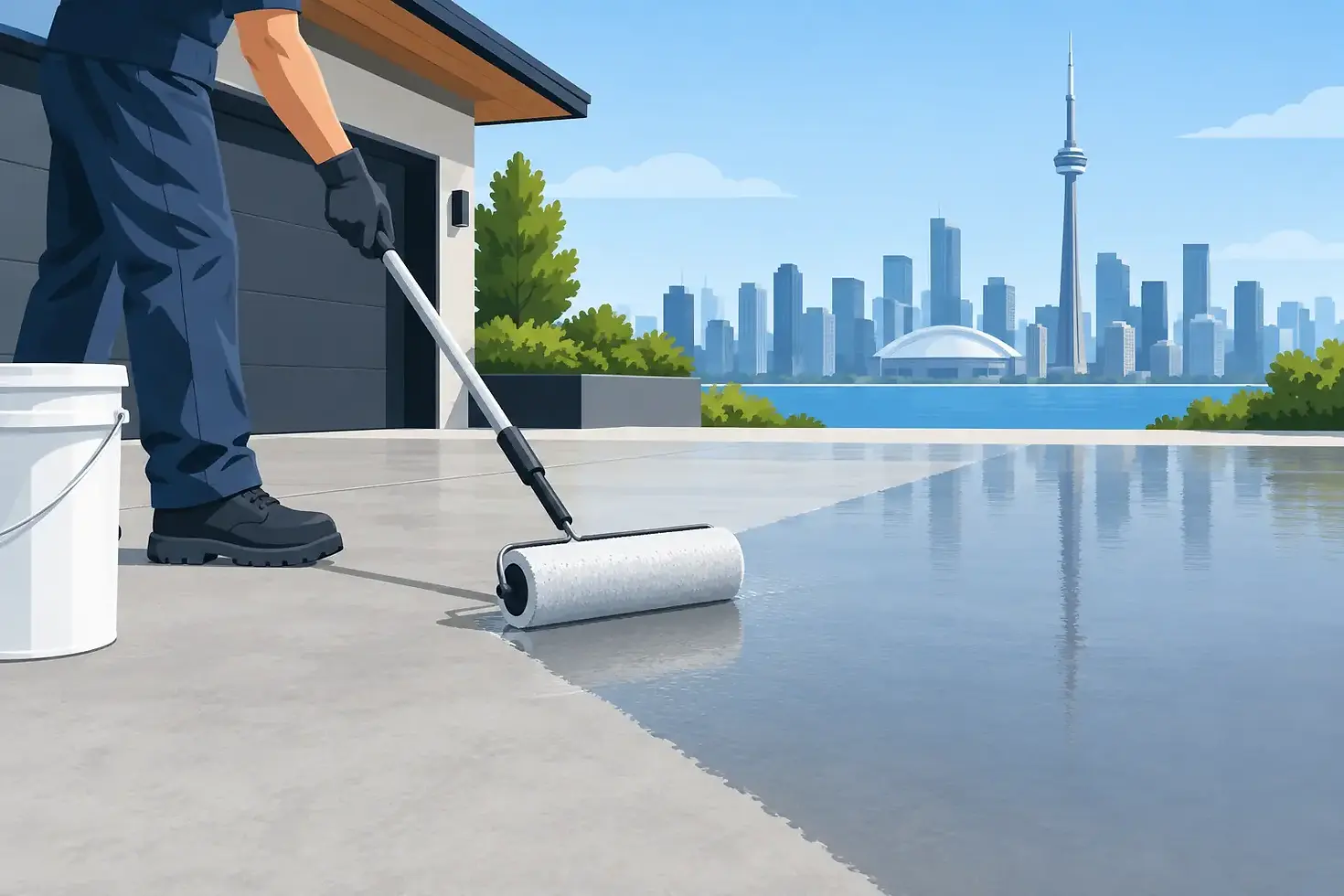
Concrete Sealing Service That Protects GTA Surfaces
Concrete can look tough enough to handle anything, but GTA winters, road salt, rain, oil drips, and regular foot traffic gradually take their toll. A professional concrete sealing service gives driveways, walkways, patios, steps, and garage floors a practical layer of protection before small surface problems become expensive repairs.
For homeowners, this is not just about making concrete look cleaner. It is about reducing moisture absorption, limiting staining, and helping the surface stand up better through repeated freeze-thaw cycles. For landlords and small commercial property owners, it is also a straightforward way to keep entrances, paths, and exterior concrete looking maintained for tenants, visitors, and customers.
Why Concrete Needs Protection in the GTA
Concrete is durable, but it is not waterproof. Its surface contains small pores that can absorb water, deicing chemicals, dirt, oil, and other contaminants. When water gets into those pores and freezes, it expands. Over time, that pressure can contribute to flaking, scaling, cracking, and surface deterioration.
Salt is another common concern around Mississauga, Brampton, Oakville, Toronto, Milton, Georgetown, Etobicoke, and Bolton. Winter deicers may be necessary for safety, but they can be hard on unprotected concrete. Vehicles also carry road salt onto driveways and into garages, where it sits on the surface through the winter.
A quality sealer helps reduce how easily water and contaminants enter the concrete. It does not make concrete indestructible, and it cannot repair major structural movement or deep cracking. What it can do is help slow the wear that leads to avoidable damage.
What a Concrete Sealing Service Should Include
Good results start long before the sealer is applied. Sealing over dirt, algae, oil, loose material, or moisture can leave a blotchy appearance and shorten the life of the coating. Surface preparation is the part of the job that often separates a lasting finish from one that peels or wears unevenly.
A proper concrete sealing service begins with an assessment of the surface condition. The contractor should look for cracks, spalling, old failing sealer, stains, drainage issues, and areas that may need cleaning or repair first. Some concrete is ready for sealing after washing and drying. Other surfaces need more attention before protection can be applied.
Cleaning Comes First
Concrete must be clean enough for the sealer to bond or penetrate properly. Power washing can remove built-up dirt, surface salt, mildew, and loose debris from patios, walkways, and driveways. Oil spots may need targeted treatment because ordinary washing does not always remove deeply absorbed automotive fluids.
The surface must also be allowed to dry. Applying sealer to damp concrete can trap moisture, interfere with adhesion, or create a cloudy finish with certain products. Weather conditions matter, particularly during spring and fall when temperatures and humidity can change quickly.
Repairs Should Not Be Skipped
Small cracks and damaged areas deserve attention before sealing. A sealer can help protect sound concrete, but it is not a substitute for crack repair or patching where the surface has already failed. If water can continue entering an open crack, sealing the surrounding area alone will not solve the problem.
There is a practical balance here. Hairline cracks are common in concrete and may not always require extensive work. Wider cracks, loose areas, scaling, or sections that have settled should be evaluated before moving ahead. An honest contractor will explain what sealing can reasonably improve and what may require repair instead.
Choosing the Right Type of Concrete Sealer
Not every surface needs the same product or finish. The right choice depends on where the concrete is located, how it is used, its current condition, and the look the property owner wants to maintain.
Penetrating sealers are often selected for exterior concrete because they soak into the surface rather than leaving a heavy film on top. They can provide water repellency while maintaining a natural appearance and allowing the concrete to breathe. This can be a good fit for exposed driveways, walkways, and steps where traction and a low-maintenance finish matter.
Topical sealers form a protective layer at the surface and can deepen the color or add a mild sheen. They may be useful for decorative concrete, stamped concrete, or surfaces where appearance is a main priority. The trade-off is that topical products can show wear more visibly in high-traffic areas and may need more careful maintenance. A glossy finish is not automatically the best choice for an exterior walking surface, especially where rain, snow, or ice are common.
For garage floors, patios, and decorative areas, the conversation should focus on how the surface is actually used. A homeowner who parks daily in a garage has different needs from someone sealing a backyard patio. The best product is the one that suits the concrete and the conditions, not simply the one with the strongest shine.
When to Seal Concrete
Concrete sealing is best planned for a stretch of suitable weather. The surface needs time to dry after cleaning, and the sealer needs the right temperature range and curing time to perform as intended. Rushing the work before rain or applying product during unsuitable conditions can compromise the result.
Spring, summer, and early fall are often practical times for exterior work in Ontario, provided the forecast cooperates. Waiting until late fall, after the surface has already absorbed a season of rain and salt, is usually less ideal. If a driveway or walkway is showing signs of water absorption, it is worth arranging an assessment before winter maintenance begins.
New concrete needs special consideration. It should cure fully before sealing, following the product requirements and the guidance of the installer. Sealing too early can lock in moisture or affect the way the concrete cures. This is one reason a one-size-fits-all timeline is not reliable.
Signs Your Concrete May Be Ready for Sealing
Concrete does not need to look severely damaged before it benefits from protection. In fact, sealing is most useful as preventative maintenance while the surface is still in good condition.
Watch for darkening after rain, which can indicate that water is soaking in rather than beading on the surface. Fading, chalky areas, stubborn stains, light surface flaking, and frequent salt residue are also reasons to take a closer look. On decorative concrete, a dull and uneven appearance may suggest that an older sealer has worn away.
A simple water test can provide a clue. Sprinkle a small amount of water on clean, dry concrete. If it darkens and absorbs quickly, the surface may no longer have effective protection. This does not replace a professional assessment, but it gives property owners a useful starting point.
Sealing Is Maintenance, Not a Permanent Fix
The life of a concrete sealer varies. Exposure to sun, traffic, snow removal, cleaning methods, and deicing products all make a difference. A lightly used backyard patio may hold protection longer than a front walkway or driveway that sees vehicles and winter salt every day.
Routine care helps extend the value of the work. Sweep debris away, rinse off salt and spills when practical, and avoid using harsh chemicals unless they are appropriate for sealed concrete. Metal shovels and aggressive scraping can also damage a surface over time, particularly where concrete is already worn.
Property owners should be cautious about promises that a single treatment will permanently prevent all cracking, staining, or winter damage. Concrete moves, weather changes, and surfaces age. The value of professional sealing is in reducing exposure and keeping maintenance manageable, not pretending those realities disappear.
A Dependable Approach to Concrete Care
The best service experience is clear from the start. You should know whether your concrete needs cleaning, repair, sealing, or a combination of services. You should also understand the expected appearance, drying requirements, and any limitations based on the condition of the surface.
VR Pero Driveway Sealing has served local property owners for generations with the same practical focus: do the preparation properly, use the right treatment for the surface, and give straightforward advice. That approach matters when protecting a driveway or patio that has to handle real Canadian weather year after year.
If rainwater is soaking into your concrete, salt marks keep returning, or the surface is beginning to look tired, do not wait for deep scaling to make the decision for you. Addressing it while the concrete is still sound is usually the most cost-effective move.


