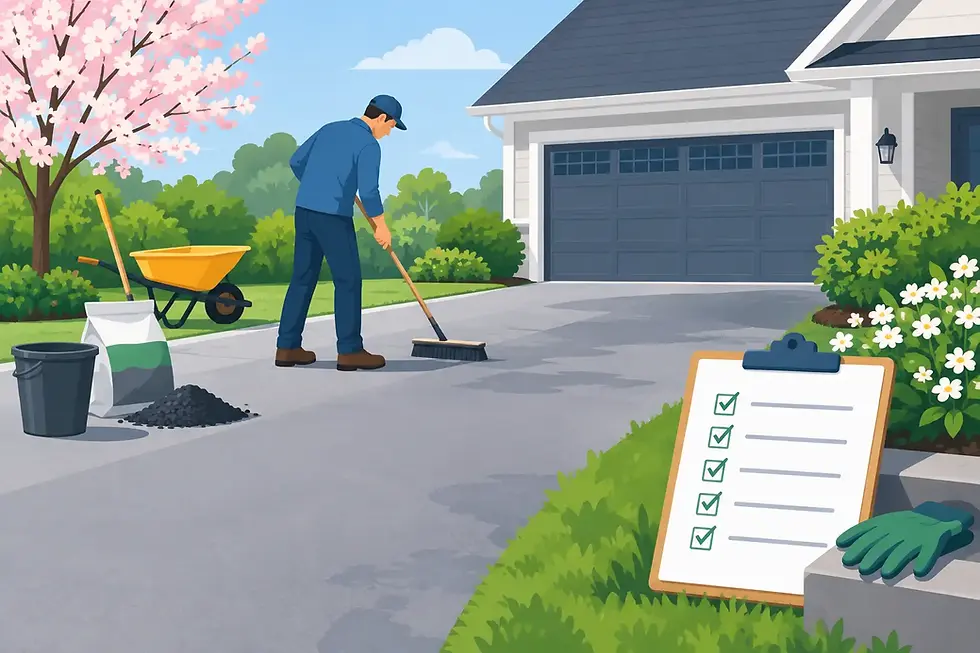
Residential Driveway Maintenance Guide for GTA Homes
A driveway usually shows trouble long before it fails. A small crack that collects water, loose interlock edging, or a faded asphalt surface can become a larger repair after one hard winter. This residential driveway maintenance guide gives GTA homeowners a practical way to protect the surface they already own, keep the property looking cared for, and avoid paying for preventable damage.
The right approach depends on the material. Asphalt, concrete, and interlock each handle water, salt, sun, and freeze-thaw cycles differently. Still, every well-kept driveway starts with the same habit: deal with small issues while they are still small.
Start With a Seasonal Driveway Inspection
Walk your driveway in early spring and again in fall. Spring reveals what winter left behind, while fall is the best time to prepare the surface for snow, ice, and road salt. Look closely at the driveway entrance, low spots, edges, and areas where downspouts discharge. These are common places for water damage to begin.
Pay attention to cracks, depressions, standing water, crumbling edges, missing joint sand, stains, and weeds. Take a few photos each season. Comparing them over time makes it easier to tell whether a crack is stable or growing.
A driveway does not need to look brand-new to be in good condition. The concern is movement and moisture. If water is entering an opening, pooling in one spot, or washing material away, the surface needs attention before the base below it is affected.
Keep Water Moving Away From the Surface
Water is one of the main causes of driveway deterioration in Ontario. It enters cracks, works below the surface, freezes, expands, and gradually weakens the driveway from underneath. A sealant can help protect the top surface, but it cannot solve a drainage problem on its own.
Check that eavestrough downspouts direct water away from the driveway. If a downspout empties beside the pavement, add an extension so water does not continually soak the edge. Also watch where melting snow travels. A low area that stays wet after every thaw deserves attention.
For asphalt driveways, a slight slope is needed to shed water rather than hold it. For interlock, settled pavers may create dips where water sits. Concrete can also settle or crack if the ground beneath it shifts. Correcting drainage early may involve regrading, lifting settled interlock, or repairing damaged sections. It is often less expensive than rebuilding a failed driveway base later.
Asphalt Driveway Care: Repair First, Then Seal
Asphalt is flexible, but it is not maintenance-free. Sun, oxygen, vehicle traffic, oil drips, and winter weather slowly dry the binder that holds the surface together. Over time, asphalt can turn gray, become brittle, and develop cracks.
Crack filling should come before driveway sealing. Sealing over open cracks does not stop water from getting below the pavement. A properly prepared crack repair helps close off that path and protects the base. Potholes, soft areas, and broken edges also need repair before any sealant is applied.
Asphalt sealing is most useful when the driveway is structurally sound and the surface has begun to fade or lose protection. It refreshes the appearance and adds a barrier against moisture, salt, and surface wear. The timing depends on the driveway's age, exposure, and condition. A driveway under heavy sun or regular vehicle use may need attention sooner than one in a shaded, lightly used area.
Do not seal brand-new asphalt too early. Fresh asphalt needs time to cure, and the appropriate waiting period can vary with weather and installation conditions. If you are unsure, ask the installer or a pavement maintenance professional before scheduling work.
Avoid parking heavy trailers, dumpsters, or vehicles in the same spot for long periods, especially during hot weather. Asphalt softens in heat, and concentrated weight can leave marks or depressions. If an oil leak occurs, clean it promptly. Petroleum products can soften and break down asphalt over time.
Concrete Driveway Care: Protect Joints and Surface Finish
Concrete is hard and durable, but it can crack when the ground moves or water enters joints. Hairline cracks are common and do not always mean the slab is failing. Wider cracks, vertical movement between sections, or recurring water pooling are stronger signs that repair should not wait.
Keep control joints and expansion joints clear of debris. These joints are designed to manage movement, but they cannot do their job if they are packed with soil, weeds, or loose material. Clean stains before they set, particularly oil, rust, and tire marks.
Concrete sealing can help limit moisture absorption and reduce damage from de-icing salts. This matters in areas where snow clearing and salting are part of every winter. The best product and application method depend on whether the concrete is plain, decorative, stamped, exposed aggregate, or previously sealed. Using the wrong coating can change the appearance or create an uneven finish, so test and preparation matter.
Be careful with harsh de-icers. Products containing calcium chloride, magnesium chloride, or sodium chloride can contribute to surface scaling when used heavily, especially on newer or already weakened concrete. Sand can improve traction without adding as much chemical stress. Use only what is needed and shovel snow before it becomes compacted ice.
Interlock Driveway Care: Maintain the Joints and Base
Interlock driveways have a different advantage: individual pavers can often be lifted and reset if an area settles. However, they still need routine care to remain stable and tidy.
Weed growth between pavers usually points to airborne seeds settling in the joints, not weeds growing up from beneath the driveway. Regular weed removal, cleaning, and replacing lost joint sand help keep the surface looking sharp. If pavers begin to shift, rock, or separate, the issue may be deeper than the joints. The bedding layer or base may need to be leveled before the movement spreads.
Power washing can remove dirt, moss, and surface staining, but excessive pressure can wash joint sand out and disturb the pavers. It should be done with care, followed by proper joint sand replacement where needed. Interlock sealing can enhance color and help resist stains, but it should only be considered after the surface is cleaned, fully dry, and structurally stable.
Use the Right Winter Habits
Snow removal is part of driveway maintenance, not just a winter chore. Use a plastic shovel edge or a snowblower set at the right height to reduce scraping on interlock and decorative concrete. Metal blades can catch paver edges, chip concrete, or leave marks when used aggressively.
Do not let snowbanks block drainage paths. When temperatures rise, those banks melt and can send a large amount of water across the driveway or toward the foundation. If possible, place snow where it will melt away from paved areas and buildings.
A few winter habits make a real difference:
Remove snow early, before it compacts into ice.
Use de-icer sparingly and follow the product directions.
Sweep away loose salt, grit, and debris after the thaw.
Check for new cracks or heaving once spring arrives.
No driveway surface is completely immune to a GTA winter. The goal is not perfection. It is limiting the water, salt, and freeze-thaw exposure that turns a minor flaw into a costly repair.
Know When a Professional Repair Is Worth It
Homeowners can handle light cleaning, weed removal, and basic visual checks. Repairs are better left to an experienced crew when cracks are widening, a pothole has formed, water is draining poorly, or the driveway has visible settlement. A surface treatment will not fix a weak base, and applying sealant over serious damage can hide the problem for a short time without solving it.
The same is true for preparation. Quality crack filling, power washing, interlock work, concrete sealing, and asphalt sealing depend on clean, dry conditions and proper materials. Weather windows matter. A job rushed before rain, applied to a damp surface, or completed without repair work can reduce the value of the service.
For homeowners in Mississauga, Brampton, Oakville, Milton, Georgetown, Etobicoke, Bolton, and Toronto, seasonal weather can be hard on exterior surfaces. Working with a local company that understands those conditions helps you make practical decisions based on the driveway's actual condition, not a one-size-fits-all schedule.
A driveway is one of the first parts of a property people see and one of the hardest-working surfaces around the home. Give it a careful look each spring and fall, correct water problems early, and repair damage before another winter gets the chance to make it worse.