
How to Remove Weeds From Interlock
A few weeds pushing up between interlock stones can make an otherwise clean driveway or patio look neglected fast. If you are wondering how to remove weeds from interlock without damaging the surface, the right approach is simple: remove the growth completely, clean the joints, and deal with the reason the weeds took hold in the first place.
Interlock is durable, but it is not maintenance-free. Windblown seeds, built-up dirt, shade, and moisture all give weeds a place to grow between the joints. Once roots settle in, pulling the tops alone rarely fixes the problem for long. The job has to be done thoroughly if you want the area to stay neat.
Why weeds grow in interlock joints
Weeds do not usually grow because the pavers have failed. In most cases, the issue is joint buildup. Over time, sand washes down, organic debris collects, and dust settles into the gaps. That creates enough material for seeds to germinate.
Moisture makes it worse. Areas with poor drainage, heavy shade, or regular sprinkler overspray tend to see faster weed growth. If the interlock has not been cleaned or re-sanded in years, weeds have an easier time anchoring themselves.
This matters because the fix is not just weed removal. If you only pull what you can see, the same conditions remain and the weeds usually return.
How to remove weeds from interlock the right way
Start with dry conditions if possible. Wet joints make it harder to remove roots cleanly, and muddy debris can smear across the surface. A dry day gives you better control.
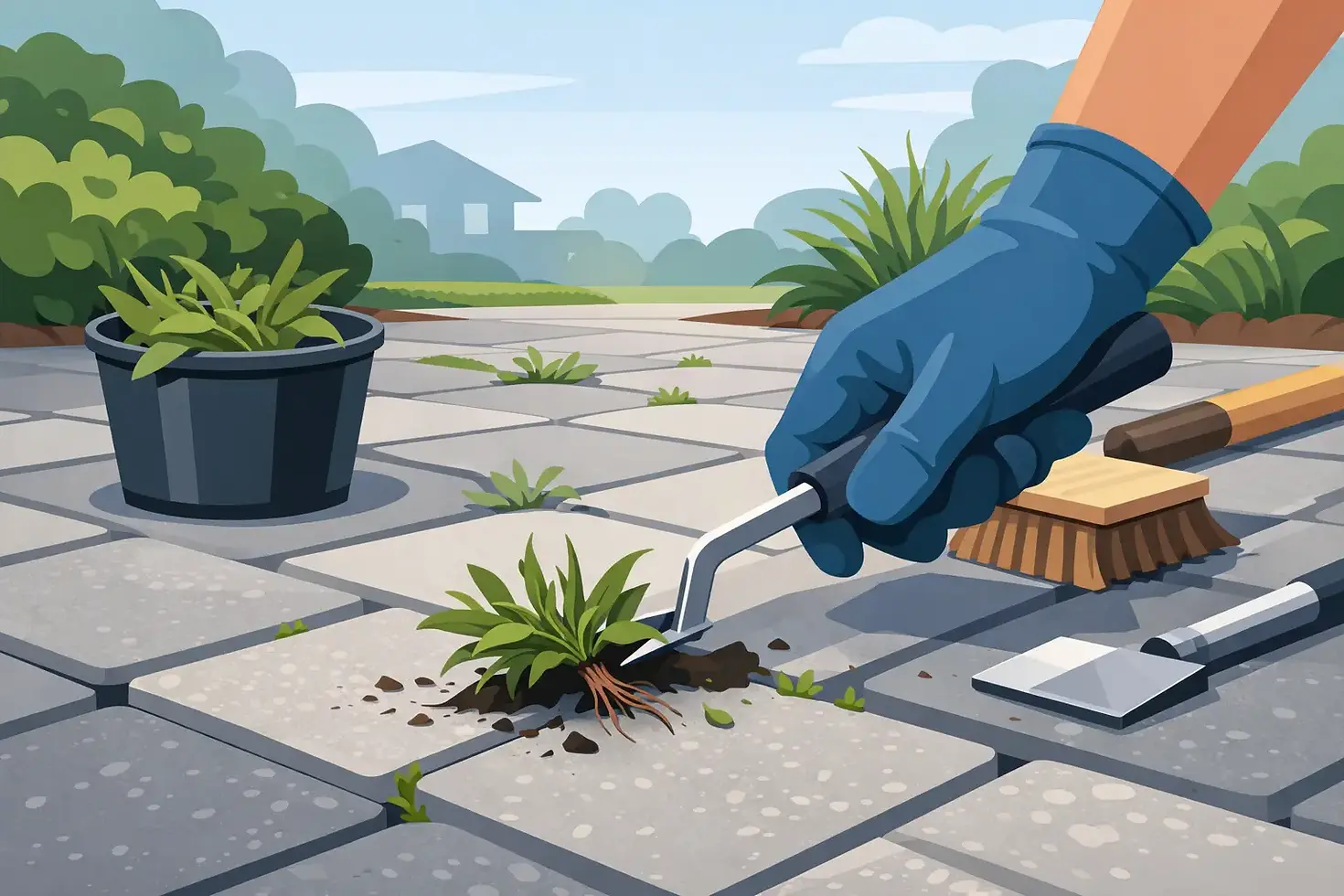
First, pull or scrape out the visible weeds. For light growth, a hand weeding tool, joint scraper, or flat screwdriver can work well. The goal is to get as much of the root system out as possible, not just snap off the green top. If the weed breaks at the surface, it will often grow back.
For larger patches, work section by section instead of attacking the whole area at once. That keeps debris manageable and helps you see where the joints have opened up or where sand is missing.
After the weeds are out, sweep away loose plant matter, dirt, and old joint material. This step is easy to rush, but it matters. If organic debris stays in the joints, you are leaving behind the exact material new weeds need.
Next, rinse or carefully wash the surface. A garden hose may be enough for small areas. For dirtier patios and driveways, pressure washing can help, but it needs to be done properly.
Using a pressure washer without damaging interlock
Pressure washing is useful, but it can also create extra work if it is too aggressive. A strong, concentrated spray can blast out joint sand, scar the surface, or loosen areas that were already vulnerable.
Use moderate pressure and keep the wand moving. Avoid aiming straight down into the joints for long periods. A wider fan tip is usually safer than a narrow point spray. You want to clean the surface and remove buildup, not carve out the bedding material underneath.
If a lot of joint sand comes out during washing, that is not automatically a disaster, but it does mean the joints need to be refilled before the area is left exposed. Open joints invite more weed growth and can allow pavers to shift over time.
Should you use weed killer?
It depends on the condition of the area and how heavily the weeds have taken over. For scattered growth, manual removal is often the cleanest option. For persistent weeds with deep roots, a targeted weed treatment may help finish the job.
If you use a weed killer, choose one meant for hardscape areas and follow the label exactly. More is not better. Overspraying can stain nearby surfaces, affect surrounding grass or garden beds, and create unnecessary chemical exposure around the home.
Some homeowners prefer vinegar-based or non-selective natural products. These can knock back top growth, but they are often less effective on established roots. That is the trade-off. A lighter product may feel more comfortable to use, but it may require repeated applications.
No matter which product you choose, weed killer should not replace physical cleanup. Dead weeds still need to be removed, and dirty joints still need attention.
Refill the joints after weed removal
One of the biggest mistakes people make after learning how to remove weeds from interlock is stopping too early. Once the weeds are gone and the surface is clean, the joints need fresh sand.
Joint sand helps lock the pavers together and reduces open space where seeds can settle. If the joints are left low or empty, weeds will come back faster and the interlock may become less stable.
For many installations, polymeric sand is a good choice because it hardens when activated correctly and helps resist washout and weed intrusion better than standard loose sand. That said, it has to be installed under the right conditions. If the surface is damp, the joints are not cleaned well, or too much water is used during activation, the result can be uneven hardening or haze on the pavers.
Regular joint sand can still work in some situations, especially for older areas that may need a more flexible maintenance approach. The right choice depends on the condition of the interlock, the width of the joints, and how much movement the surface has seen over time.
Sealing helps, but timing matters
After weed removal and re-sanding, sealing the interlock can help protect the surface and reduce future weed growth. A quality sealer helps stabilize joint sand, limits water penetration, and makes routine cleaning easier.
Sealing is especially useful on driveways, walkways, and patios that see regular weather exposure. In places like the GTA, freeze-thaw cycles, rain, and seasonal debris all work against hardscapes. Keeping the surface protected can reduce wear and help preserve curb appeal.
That said, sealing should not be rushed. The interlock needs to be properly cleaned, the joints need to be filled correctly, and the surface needs to be dry enough for the product to perform as intended. Applying sealer over a poorly prepared surface usually locks in problems instead of solving them.
When the weed problem points to a bigger issue
Sometimes recurring weeds are a symptom, not the main problem. If certain sections keep growing weeds no matter how often you remove them, look closer at drainage, slope, and joint loss.
Sunken areas can collect water and debris. Edges may have opened up. Tree roots or surface movement may be creating gaps that let more material build up between the pavers. In these cases, simple weed removal may only offer short-term improvement.
This is where experienced surface care makes a difference. A long-standing company like VR Pero Driveway Sealing has seen the difference between a basic cleanup and a maintenance issue that needs proper restoration. Not every weed problem requires major work, but some do need more than a weekend fix.
How to keep weeds from coming back
The best prevention is regular maintenance. Sweep the interlock often enough that leaves, soil, and debris do not sit in the joints for months. Rinse off buildup before it turns into a growing medium. If you notice joint sand washing out, address it early.
It also helps to trim nearby grass and garden edges so seeds are not constantly spreading into the pavers. Reduce unnecessary watering where possible, especially in shaded sections that stay damp. Small habits make a bigger difference than most people expect.
A yearly inspection is smart. Look for low joints, stains, moss, and any movement in the surface. Catching these signs early is usually far less expensive than waiting until the interlock needs major rework.
When to handle it yourself and when to call a pro
If the weeds are light, the interlock is in good condition, and you are comfortable with the cleanup, this can be a manageable DIY job. A few tools, some patience, and proper joint refill can go a long way.
If the area is large, heavily infested, badly stained, or overdue for re-sanding and sealing, professional service is often the better value. The same goes for commercial entryways, rental properties, or high-visibility front driveways where appearance matters and the work needs to last.
The main thing is not to let the problem sit. Weeds rarely stay small for long, and the longer they remain, the more debris and moisture they trap in the joints. A clean interlock surface always looks better, but more than that, it stays in better shape when the maintenance is done at the right time.


