
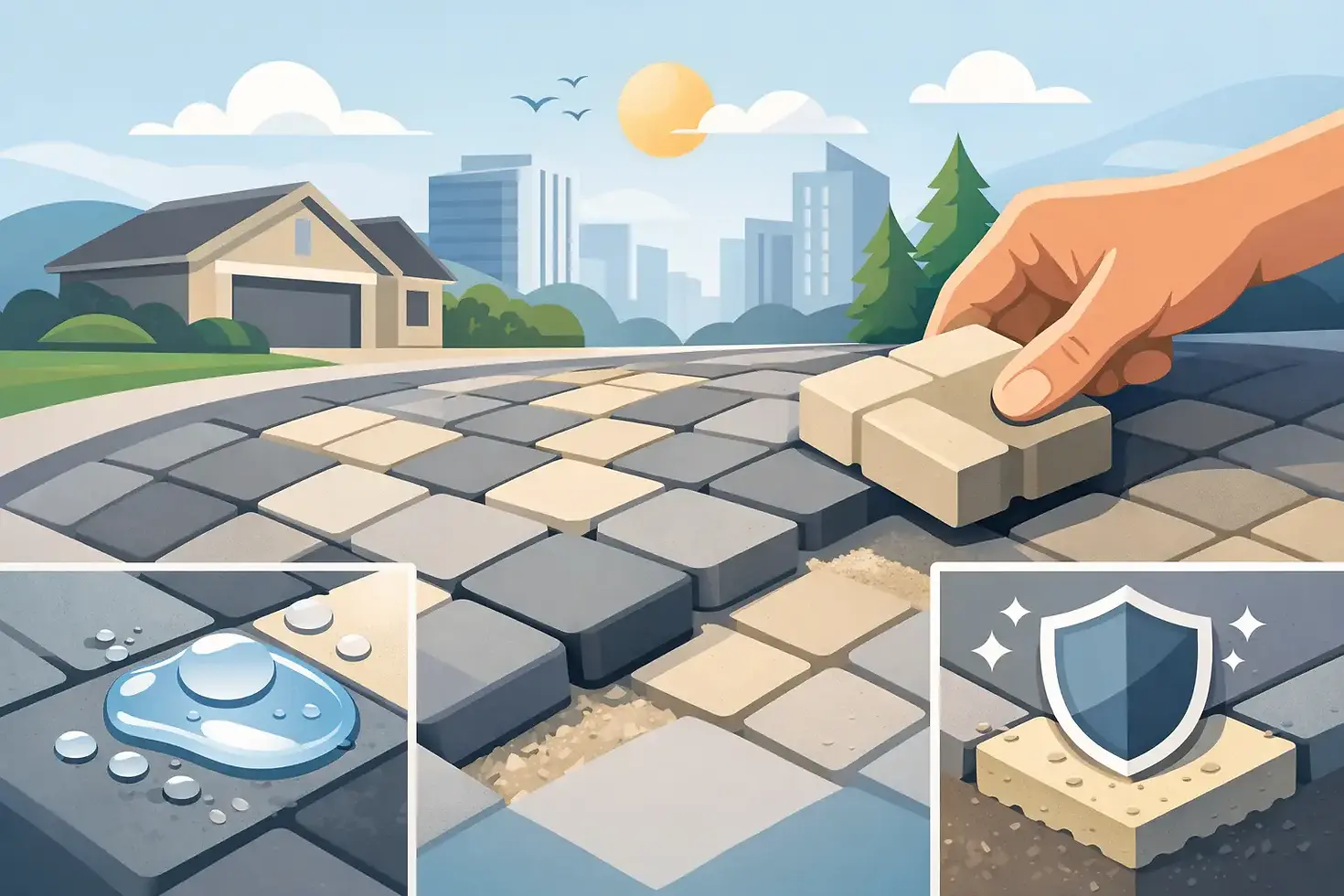
Interlock Sealing Benefits for Your Property
A good interlock driveway or patio can make a property look finished. A neglected one starts to show it fast - faded color, joint sand loss, weeds pushing through, and stains that never quite wash out. That is why homeowners often ask about interlock sealing benefits. Done at the right time and with the right prep, sealing helps protect the surface, hold the joints together better, and keep the whole area looking cleaner for longer.
What interlock sealing actually does
Interlock pavers are built to handle traffic and weather, but they are still exposed to water, sun, dirt, oil, and regular wear. Over time, the surface can lose its original color and the joint sand between pavers can start to shift or wash away. Once that happens, pavers may become looser, weeds can move in, and the area starts to age unevenly.
Sealing adds a protective layer over the pavers and helps stabilize the sand in the joints. It does not make the surface maintenance-free, and it does not fix structural problems underneath the base. What it does is slow down day-to-day deterioration so the surface stays in better shape between major repairs.
The main interlock sealing benefits homeowners notice
For most property owners, the first benefit is appearance. Sealing can deepen the color of the pavers and give the surface a cleaner, more cared-for look. On a front walkway, driveway border, backyard patio, or pool surround, that visual improvement is often immediate.
The second benefit is stain resistance. Interlock is porous, which means oil, rust, food spills, leaf staining, and general grime can work their way in. A sealer helps reduce how quickly those contaminants soak into the paver. That does not mean every stain wipes off with no effort, but it usually makes cleanup easier and helps prevent permanent marks.
Another major advantage is better joint retention. The sand between pavers matters more than many people realize. It helps lock the system together and reduces movement. When sealing is done after proper cleaning and re-sanding, the joints tend to hold up better against rain, wind, and regular use.
Weed growth is another reason many homeowners seal interlock. Weeds do not usually grow up from underneath a properly built base. More often, seeds settle into open joints and grow from the top. Sealing helps limit that by reducing open spaces where seeds and debris collect. It will not guarantee a weed-free surface forever, but it can make ongoing upkeep much easier.
Why sealing matters in freeze-thaw conditions
In places with strong seasonal weather, water is hard on exterior surfaces. Interlock can handle freeze-thaw cycles well when installed properly, but moisture still creates wear over time. Water gets into porous surfaces, and repeated freezing and thawing can contribute to surface breakdown, shifting joint material, and general aging.
A quality sealer helps reduce water absorption. That matters on driveways, walkways, and patios that see snow, rain, and spring runoff. Less moisture getting into the pavers means less opportunity for the surface to weather prematurely.
That said, sealing is not a cure-all for drainage problems. If water is pooling, the issue may be with the slope, base, or surrounding grading. Sealer helps as part of a maintenance plan, not as a substitute for correcting underlying installation issues.
Sealing helps protect the investment you already made
Interlock is not a small purchase. Whether it is a front entrance, backyard patio, or full driveway, property owners usually choose it because it looks better than plain concrete and adds curb appeal. It also tends to cost more upfront, so protecting that investment makes sense.
One of the practical interlock sealing benefits is that it can stretch the life of the surface appearance before a restoration is needed. Fading, joint erosion, staining, and weed growth make interlock look older than it is. Sealing helps slow those issues down, which can delay more expensive maintenance work.
For landlords and small commercial properties, that matters too. A clean, well-kept entrance or walkway gives tenants, visitors, and customers a better impression. It also helps keep routine maintenance more predictable instead of waiting until the whole area looks worn out.
Appearance matters, but finish choice matters too
Not every homeowner wants the same result. Some like a more natural look, while others prefer a richer, darker finish that makes the paver color stand out. The right sealer depends on the material, the age of the pavers, and the look you want.
This is where experience matters. Too much product, poor prep, or the wrong finish can leave a surface looking patchy or overly glossy. On the other hand, a well-prepared and properly sealed surface looks clean and even without looking forced.
There is also a practical side to finish selection. Some areas benefit from a more subtle result, especially around pool decks or walkways where traction matters. The best approach is not always the shiniest one. It depends on how the area is used.
Good preparation is what makes sealing worth it
The biggest mistake property owners make is thinking sealing is just a quick spray-over service. It is not. If the surface is dirty, if weeds and moss are left in place, or if the joints are missing sand, sealing over those problems only locks in a poor result.
Proper prep usually includes a full cleaning, removal of surface growth, treatment of stains where possible, and re-sanding of joints if needed. Only after the pavers are clean and dry should sealer be applied. Skipping those steps can shorten the life of the job and leave the surface looking uneven.
This is one reason timing matters. Freshly installed interlock may need time to settle before sealing, while older surfaces may need restoration work first. A reliable contractor should be honest about that instead of treating every project the same way.
When sealing may not be the right next step
There are cases where sealing should wait. If pavers are actively sinking, shifting, or separating, structural repairs come first. Sealer will not level a low spot or correct a failing base. If there is heavy efflorescence or deep-set staining, the area may also need more preparation before sealing makes sense.
Some homeowners also wait too long, thinking the surface is still fine because it is usable. By the time joints are badly eroded and weeds are established throughout, the prep work becomes more involved. Sealing still helps, but the best results usually come from staying ahead of the wear rather than catching up after years of neglect.
How often should interlock be sealed?
There is no one schedule that fits every property. Sun exposure, drainage, traffic, tree cover, and how the area is used all affect timing. A backyard patio with light use may hold up differently than a front driveway that sees daily parking, snow removal, and oil drips.
In general, the surface should be monitored for fading, increased staining, joint sand loss, and more frequent weed growth. Those are all signs the protection is wearing down. Resealing at the right interval is usually more cost-effective than letting the surface decline to the point where restoration becomes the bigger job.
For homeowners in busy residential areas, especially where curb appeal matters, regular maintenance often pays off. A driveway or walkway is one of the first things people see. Keeping it protected helps the whole property present better.
Choosing the right contractor matters as much as the sealer
Interlock sealing is one of those services where the result depends heavily on the process. The product matters, but surface prep, weather timing, joint condition, and application method matter just as much. A rushed job can leave haze, uneven color, trapped debris, or weak joint performance.
That is why many property owners look for a company with a long track record in exterior surface care, not just someone offering sealing as a side service. An experienced crew will know when to clean deeper, when to re-sand, when to hold off because of weather, and when to recommend repairs before sealing.
For homeowners across the GTA, that kind of honest guidance is usually what makes the difference between a surface that looks good for a few weeks and one that holds up the way it should.
A well-built interlock surface already adds value to a property. Sealing helps protect that value, keeps maintenance more manageable, and gives the space a cared-for look that lasts longer. When it is done properly and at the right time, it is one of the simpler ways to keep a driveway, patio, or walkway working hard and looking right.


