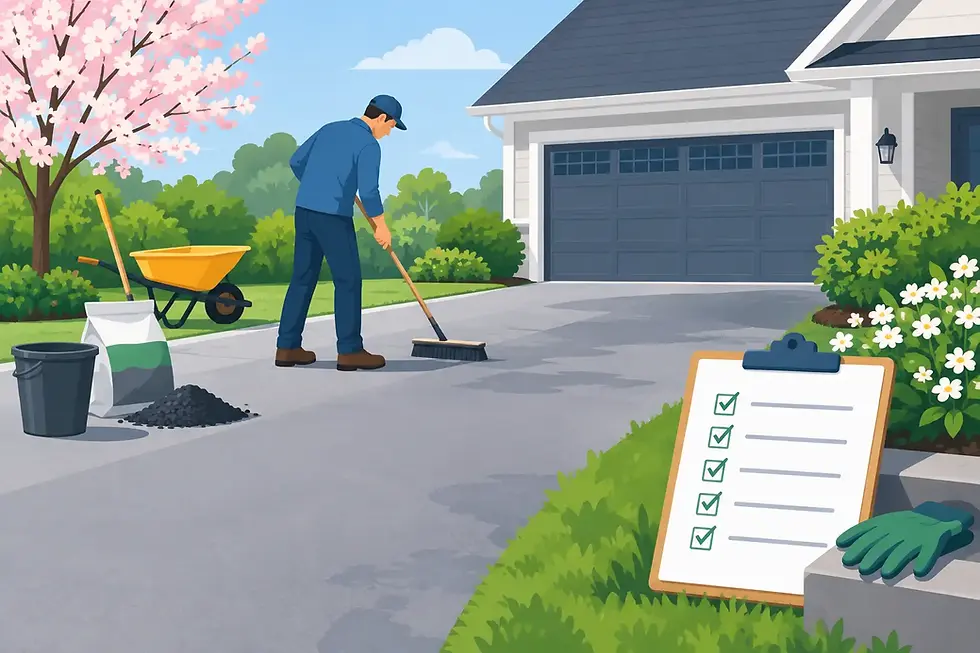
Is Driveway Sealing Worth It? Yes, Usually
A driveway usually does not fail all at once. It starts with fading, then small cracks, then water gets in, and before long you are looking at rough patches, potholes, or edges that break down faster than expected. That is why homeowners often ask, is driveway sealing worth it? In most cases, yes - but only when the driveway is in the right condition and the work is done at the right time.
For homeowners in the GTA, that question matters because our weather is hard on pavement. Sun, rain, snow, ice, road salt, and freeze-thaw cycles all work against asphalt year after year. Sealing is not a magic fix, and it is not the right move for every surface, but it can be a smart part of keeping a driveway in good shape longer.
Is driveway sealing worth it for asphalt?
If you have an asphalt driveway that is structurally sound, sealing is often worth the cost. The main reason is simple: asphalt is exposed to oxidation, moisture, vehicle fluids, and weather. Over time, those factors dry the surface out and make it more brittle. A quality sealer helps slow that process.
That matters because asphalt is easier and less expensive to maintain than it is to replace. A fresh seal coat helps protect the surface layer before damage becomes more serious. It also improves appearance, which is one of the first things people notice from the street.
Still, sealing is not a cure-all. If a driveway already has widespread cracking, soft spots, drainage problems, or base failure, a seal coat will not solve those issues. In that situation, repairs need to come first. Sometimes a driveway is too far gone for sealing to make financial sense.
What driveway sealing actually does
The value of sealing makes more sense when you look at what it is supposed to do. A good sealer acts as a protective barrier on the surface. It helps reduce how quickly water penetrates, limits damage from UV exposure, and adds some resistance against oil and gas stains.
It also gives the driveway a darker, more uniform finish. For many homeowners, that curb appeal matters. A clean, sealed driveway can make the whole front of the property look better maintained, especially when paired with crack filling, edging, and proper cleanup.
The key point is that sealing helps preserve a driveway. It does not rebuild it. That difference is where a lot of confusion comes from.
When driveway sealing is worth it
Sealing tends to be worth it when the driveway is still in decent condition and you are trying to protect what you have. If the asphalt is aging but not failing, maintenance usually costs less than waiting for bigger repairs later.
A newer driveway is often a good candidate once it has fully cured and reached the proper age for sealing. An older driveway can also benefit if the cracks are minor and any needed repairs are handled first. Property owners who care about appearance, resale value, or avoiding premature deterioration usually see sealing as money well spent.
It can also make sense for rental properties and light commercial sites where presentation matters. A parking area or driveway that looks clean and cared for sends a different message than one that looks dried out and neglected.
When sealing may not be worth it
There are situations where the honest answer is no. If the driveway has major structural issues, sealing may only improve the look for a short time without addressing the real problem underneath. That can lead to frustration because the surface may still keep breaking down.
It may also not be worth it if the work is done too often, too cheaply, or without proper prep. Sealing over dirt, untreated cracks, or oil-heavy areas usually leads to poor results. The same is true if someone treats every driveway the same way, regardless of condition.
And if your expectation is that sealing will stop all cracking forever, you will probably be disappointed. Asphalt moves with weather and age. Sealing helps slow wear, but it does not freeze time.
The cost question most homeowners care about
For most people, the real question behind is driveway sealing worth it is whether the savings are real. In practical terms, sealing is usually a lower-cost maintenance step compared with more extensive asphalt repair or full replacement. That does not mean every seal coat pays for itself immediately, but it can help extend the life of the driveway and delay bigger expenses.
Think of it the same way you would think about maintaining a roof, deck, or fence. You do not maintain it because it becomes brand new again. You maintain it because replacing neglected surfaces is far more expensive.
That said, value depends on timing. If you seal a driveway that is already too far deteriorated, you may spend money on appearance without gaining much life from the pavement. If you seal at the right stage and keep up with crack filling and repairs, the return is usually better.
Why preparation matters more than people think
One reason some homeowners say sealing is not worth it is because they had a bad experience. Often, the issue is not the idea of sealing itself. It is the quality of preparation.
A driveway should be properly cleaned before sealer is applied. Cracks should be assessed and filled where appropriate. Oil spots need attention. The surface should be dry, and the weather should cooperate. If those basics are skipped, the final result may not last the way it should.
Good prep is also a sign that a contractor is focused on long-term performance, not just making the driveway look dark for a few weeks. That matters if you are paying for professional service and expecting real protection.
GTA weather changes the answer
In a mild climate, some homeowners can get away with less frequent pavement maintenance. In the Greater Toronto Area, conditions are tougher. Water infiltration followed by freezing temperatures is one of the biggest reasons asphalt cracks and deteriorates. Add road salt, plow activity, and hot summer sun, and the surface takes a beating all year.
That is why sealing often makes more sense here than people assume. You are not just protecting against one type of wear. You are trying to reduce several forms of stress that work together to shorten pavement life.
For local homeowners, this is less about chasing a perfect finish and more about sensible upkeep. A driveway is part of the property, and like any exterior surface, it lasts better when it is maintained before problems get expensive.
Is driveway sealing worth it if appearance matters most?
Yes, if the driveway is in fair shape and you want to improve curb appeal without a major project. A fresh, even surface can make the property look cleaner and better cared for. That is especially useful if you are getting ready to sell, renting out a home, or just want the front of the house to look sharper.
But appearance alone should not be the only reason. The best value comes when better appearance and surface protection go together. If sealing is only hiding serious wear for a short time, the cosmetic improvement may not justify the cost.
How to think about the decision
The simplest way to decide is to look at the current condition of the driveway and your plans for the property. If the asphalt is basically sound, sealing is often a practical investment. If the driveway has significant damage, the money may be better spent on repairs first.
It also helps to think in terms of maintenance cycles instead of one-time fixes. Driveways need attention over time. Sealing works best as part of a broader approach that can include crack filling, pothole repair, cleaning, and keeping water draining properly.
That is the mindset many long-established contractors take because it is the honest one. At VR Pero Driveway Sealing, that has been the practical approach for generations: protect what can be protected, repair what needs repair, and do not promise that a coating will solve problems it cannot solve.
So, is driveway sealing worth it? For many asphalt driveways, yes - especially when the surface is still in serviceable condition and the goal is to extend its life, improve appearance, and stay ahead of bigger repair bills. The best results come from doing it at the right time, with proper prep, and with realistic expectations about what sealing can and cannot do.
If your driveway is starting to show age but is not yet failing, that is usually the moment to act. Waiting rarely makes pavement stronger.