How to Maintain a Concrete Driveway Year-Round
A concrete driveway can look nearly indestructible when it is new. After a few GTA winters, however, road salt, freeze-thaw cycles, pooled water, and vehicle traffic can expose every weak spot. Knowing how to maintain a concrete driveway means dealing with small issues early, before a minor crack, stain, or surface chip turns into a more expensive repair.
Concrete is durable, but it is not maintenance-free. A regular routine keeps the surface cleaner, helps it shed water properly, and protects the investment you have made in your home’s curb appeal.
Start With Regular Cleaning
Dirt alone will not usually harm concrete, but it holds moisture and can hide developing problems. Leaves, grass clippings, soil, and standing water can also leave stains or encourage moss and algae in shaded areas.
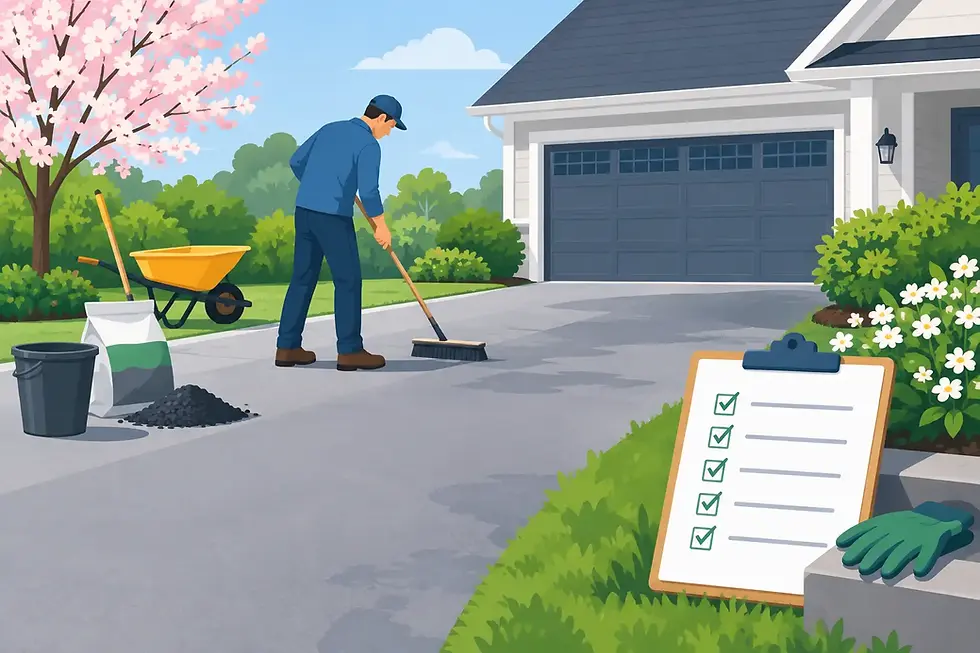
Sweep the driveway regularly, especially during spring and fall. This simple job removes abrasive grit that gets tracked across the surface by tires and foot traffic. It also makes it easier to see cracks, oil spots, and areas where the concrete is beginning to scale.
For a deeper clean, use a garden hose with a spray nozzle or a pressure washer on an appropriate setting. Pressure washing can lift built-up dirt, algae, and many surface stains, but too much pressure or holding the wand too close can damage weak or already flaking concrete. Keep the spray moving and test an inconspicuous area first.
Oil and automotive-fluid spills deserve quick attention. Cover a fresh spill with an absorbent material, then sweep it up and use a concrete-safe degreaser as needed. The longer oil sits on the surface, the farther it can penetrate and the harder it becomes to remove. Avoid harsh acids or untested household chemicals, which can discolor or etch the concrete.
Keep Water Moving Away From the Driveway
Water is one of the biggest causes of concrete damage, particularly where temperatures move above and below freezing. When water enters a small crack or sits near an edge, it can freeze, expand, and force the concrete apart.
Walk your driveway after a hard rain. Look for low spots, puddles that remain long after the rain stops, downspouts that discharge onto the slab, or soil that has settled along the driveway edge. These conditions should be addressed before winter whenever possible.
Extend downspouts so roof runoff drains away from the driveway. Keep nearby eavestroughs clear, and avoid directing sprinklers onto the concrete. If a section consistently holds water, the right solution may involve drainage work, grading, or a localized repair. Sealer can help reduce moisture absorption, but it cannot correct a drainage problem underneath or beside the slab.
Inspect Cracks Before They Spread
Small cracks are common in concrete. Concrete naturally shrinks as it cures, and changing temperatures cause it to move over time. The goal is not to expect a perfectly unmarked driveway forever. The goal is to prevent cracks from becoming open paths for water and debris.
Inspect the surface at least twice a year: once in spring after winter weather and once in fall before cold temperatures return. Pay close attention to control joints, edges, areas near garage doors, and spots where vehicles regularly turn or park.
Hairline cracks may be mostly cosmetic, but wider cracks should be cleaned and filled with a compatible concrete crack filler. Remove loose material and weeds first so the repair material can bond properly. If the crack has uneven sides, is widening quickly, or is paired with sinking or heaving, it may point to movement in the base below. That is a situation worth having assessed before simply filling the surface.
Do not ignore chipped or flaking areas either. Surface scaling can begin when moisture, salt, or repeated freezing affects the top layer of concrete. Early patching may slow the damage. Extensive scaling, however, may require a more involved resurfacing or replacement decision depending on how deep the deterioration goes.
Use Salt Carefully in Winter
Winter traction matters, but many de-icing products are hard on concrete. Traditional rock salt can increase freeze-thaw damage, while some chemical deicers can still affect concrete even when marketed as safer options. Newly poured concrete is especially vulnerable during its first winter.
The most reliable approach is mechanical removal first. Shovel snow promptly using a plastic shovel edge when possible, then use sand or a concrete-safe traction product for grip. Sweep excess material away once conditions improve so it does not accumulate in joints and low spots.
If deicer is necessary, follow the product instructions and use only what is needed. More product does not mean better traction. Never use fertilizer, automotive antifreeze, or improvised chemical mixtures on a driveway. They can cause surface damage, create runoff concerns, and leave behind difficult stains.
Seal Concrete When the Surface Is Ready
Concrete sealing is a practical part of long-term maintenance because it helps limit water penetration, staining, and wear from weather exposure. It is particularly useful on driveways that face regular snow, ice, road salt, and vehicle traffic.
The right timing depends on the concrete’s age, condition, previous treatments, and the type of sealer used. New concrete must cure fully before it is sealed. Existing concrete should be clean, dry, and free of loose or failing coatings before a new application. Applying sealer over trapped moisture, dirt, or peeling product can create a patchy finish and reduce performance.
Most driveways benefit from periodic resealing, but there is no one schedule that fits every property. A shaded driveway with heavy traffic and frequent moisture may need attention sooner than a sunny driveway with light use. Watch for signs that water is no longer beading on the surface, stains are soaking in quickly, or the existing sealer looks worn and uneven.
A professional assessment can help determine whether your driveway needs cleaning, crack repair, resealing, or a different type of repair first. VR Pero Driveway Sealing has worked with exterior surfaces across the GTA for generations, and proper preparation remains the difference between a coating that performs and one that disappoints.
Protect the Edges and Avoid Heavy Point Loads
Driveway edges are more exposed than the center of the slab because they do not have support beyond the side of the concrete. Avoid driving off the edge, parking heavy equipment close to it, or allowing landscaping soil to pile high against it. These habits can lead to cracking and broken corners over time.
Be mindful of concentrated loads as well. Large dumpsters, moving trucks, construction equipment, and trailer jacks can damage concrete, particularly if the base is weak or the driveway is older. If heavy work is planned at your property, ask the contractor how loads will be distributed and whether protective boards are needed.
Tree roots also deserve attention. Roots can lift slabs and create trip hazards, but cutting roots without a plan can harm the tree or fail to solve the problem. When root pressure is affecting the driveway, consider both the condition of the tree and the extent of concrete movement before choosing a repair.
How to Maintain a Concrete Driveway Through the Seasons
A seasonal routine makes concrete care manageable. In spring, clear winter grit, inspect for cracks and scaling, and clean away salt residue. Summer is the best time to handle many cleaning, repair, and sealing projects because warm, dry weather supports proper curing.
In fall, remove leaves, check drainage, clean gutters and downspouts, and fill cracks before freeze-thaw weather arrives. During winter, shovel early, use traction materials carefully, and avoid piling snow where melting water will drain back across the driveway.
The best maintenance plan is the one you can keep up with. A driveway does not need constant attention, but it does need a homeowner’s eye. Sweep it, keep water moving, repair cracks while they are manageable, and protect the surface before another season has the chance to work against it.