
Asphalt Sealing Service: What to Expect
A driveway usually tells on itself before it fails. The rich black finish turns gray, small cracks start spreading, and water sits where it should run off. That is usually the point when homeowners start looking for an asphalt sealing service - not because the surface is beyond saving, but because they want to keep a manageable problem from turning into an expensive one.
For most residential properties, sealing is not about cosmetics alone. A cleaner, darker driveway does improve curb appeal, but the bigger value is protection. Asphalt takes a beating from sun, rain, road salt, vehicle traffic, and seasonal temperature swings. Over time, that exposure dries out the surface and weakens it. Sealing helps slow that process down.
What an asphalt sealing service actually does
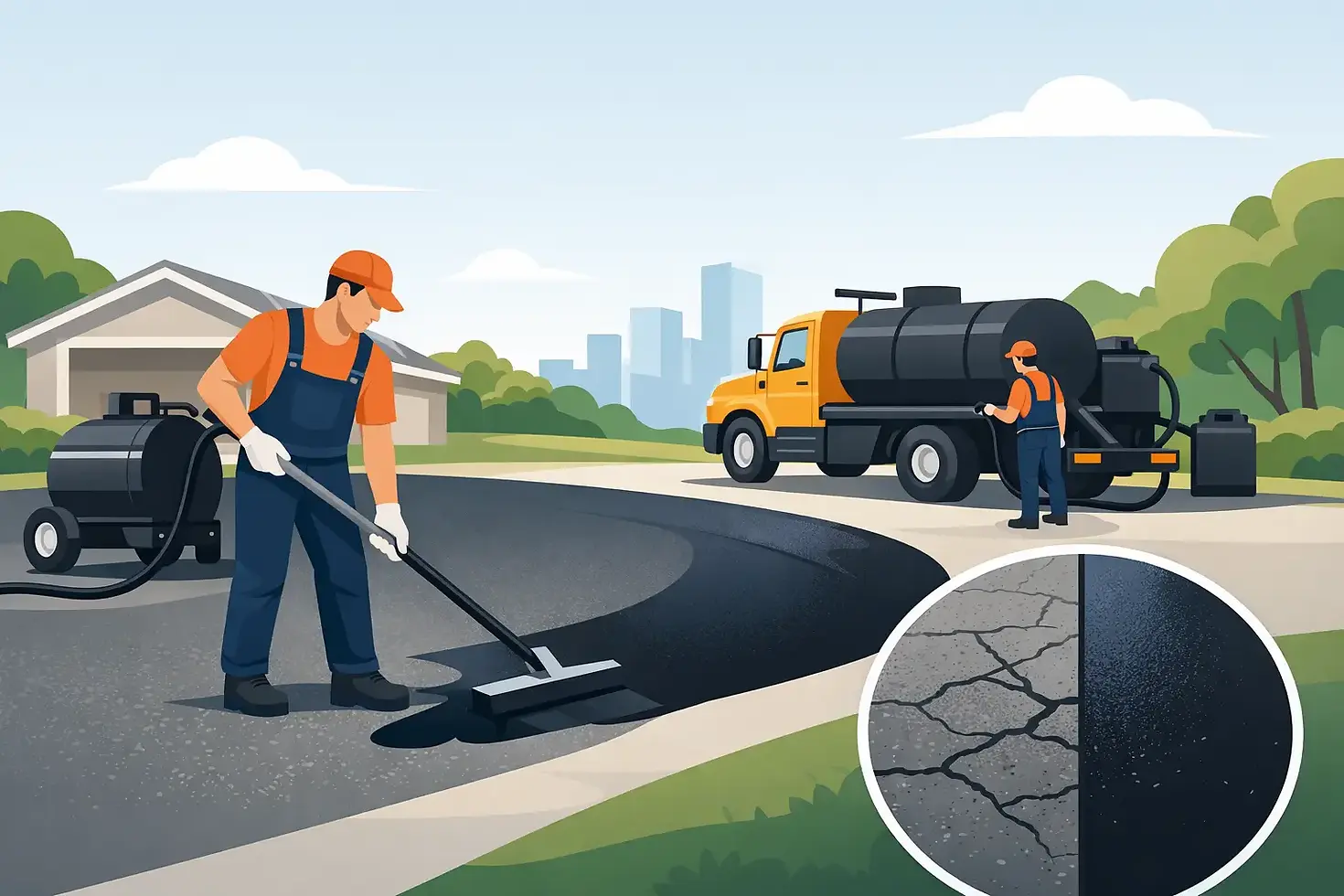
A good asphalt sealing service is meant to protect the surface layer of your driveway and help extend its useful life. It creates a protective barrier that reduces the impact of water penetration, oxidation, and day-to-day wear. That matters because once moisture gets into cracks and weak spots, the damage tends to grow faster.
Sealing is also one part of a larger maintenance plan. It works best when paired with crack filling, minor asphalt repair, and regular cleaning. If a driveway already has open cracks, soft spots, or potholes, simply coating over those issues will not fix them. The right approach is to deal with the damage first, then apply sealer to the prepared surface.
That is where experience matters. A contractor who works on pavement every day knows the difference between a driveway that needs routine sealing and one that needs repair before sealing makes sense.
When sealing makes sense - and when it does not
Timing matters with asphalt. A newer driveway should not always be sealed right away. Fresh asphalt needs time to cure, and sealing too early can trap oils before the surface is ready. On the other hand, waiting too long leaves the pavement exposed to avoidable wear.
For an older driveway, the right schedule depends on traffic, drainage, sun exposure, and overall condition. A lightly used residential driveway may age differently than one with multiple vehicles, frequent turning, or regular delivery traffic. A shaded driveway may hold moisture longer, while one in full sun may dry out and fade faster.
There is no honest one-size-fits-all answer here. Some surfaces are good candidates for routine resealing, while others need more involved work first. If the asphalt is badly broken up, heavily alligatored, or failing at the base, sealing may improve appearance for a short time but it will not solve the underlying problem.
What to expect before the sealer goes down
Preparation is where the quality of the job is often decided. A driveway needs to be cleaned properly so the sealer can bond to the surface. Dirt, dust, weeds, oil spots, and loose debris all interfere with that process. If cracks are present, they should be assessed and filled where appropriate before sealing begins.
This part is not glamorous, but it is what separates a quick coat from a professional result. The surface should also be dry, and the weather needs to cooperate. Sealer applied in poor conditions can cure unevenly, wear prematurely, or fail to adhere the way it should.
For homeowners, this usually means a little planning. Vehicles need to be off the driveway, access needs to be clear, and the surface needs time to dry and cure after the work is done. A dependable contractor will explain that upfront instead of rushing through it.
The difference between a cheap job and a lasting one
Most property owners are not looking at sealant formulas or application rates. They are looking at price, timing, and whether the driveway will look better when the crew leaves. That is understandable, but it can also lead to shortcuts.
A very cheap asphalt sealing service often cuts time where it matters most. That might mean weak prep work, thin application, poor crack treatment, or little attention to edges and detail. The driveway may look fresh for the moment, but appearance alone is not the same as protection.
A better job usually shows up in the small things. The surface is properly cleaned. Cracks are addressed instead of hidden. The coverage is even. The crew respects the property and gives clear instructions about curing time and aftercare. Those details matter because driveway maintenance is not just about getting through this season. It is about avoiding early deterioration over the next several years.
Why homeowners wait too long
Driveways tend to be easy to ignore because damage builds gradually. A roof leak demands attention. A broken furnace cannot be postponed. Asphalt usually gives people a long warning period, and that can create the false sense that maintenance can always wait one more year.
The problem is that pavement damage is cheaper to manage early. Small cracks can often be filled. Surface wear can often be protected with sealing. Once water gets deeper into the asphalt and freeze-thaw cycles do their work, repairs become more extensive. What could have been routine maintenance starts edging toward patching or replacement.
For homeowners who care about protecting the value of the property, that is the real case for sealing. It is not about chasing a perfect finish. It is about staying ahead of preventable wear.
Asphalt sealing service for residential and light commercial properties
Residential driveways are the most common setting for sealing, but small commercial properties often benefit from the same maintenance approach. A small parking area, laneway, or private access drive still deals with weather, traffic, water, and surface breakdown. The expectations are slightly different, but the need for upkeep is similar.
For landlords and property managers, appearance also plays a practical role. A well-kept paved surface gives tenants, visitors, and customers a better first impression. More importantly, it shows that the property is being maintained before neglect turns into liability.
The work still has to match the surface condition. A light commercial lot with more traffic may need a different schedule than a single-family driveway. The principle stays the same, though - protect sound pavement before it becomes damaged pavement.
Choosing the right contractor
This is one of those services where trust matters as much as technique. Homeowners want to know who is showing up, what is being applied, and whether the job will be done properly the first time. That is why long-standing local companies tend to stand out. They are not relying on a one-season sales pitch. Their name stays in the community.
A contractor should be clear about what the job includes, whether crack filling is needed, how long the surface should stay clear, and what results are realistic. If a driveway is too far gone for sealing to be the answer, you should hear that plainly. Straight answers are part of good service.
That approach has helped family-run companies like VR Pero Driveway Sealing earn trust over time. When a business has spent decades working on local properties, it usually understands what customers care about most - dependable work, fair dealing, and results that hold up.
What homeowners can do after sealing
Once the sealer is applied, the main job is patience. Give the driveway the time it needs before walking or driving on it. After that, simple care goes a long way. Keep the surface reasonably clean, remove weeds at the edges, and pay attention to new cracks before they grow.
It also helps to think of the driveway as part of the overall exterior, not a separate issue. Water runoff, nearby tree growth, interlock edging, and adjacent concrete can all affect how the pavement ages. Looking after the full surface area around the home usually leads to better long-term results than treating one problem at a time.
A well-timed asphalt sealing service will not stop aging altogether. Nothing does. What it can do is slow the wear, improve the look of the property, and give your driveway a better chance to last the way it should. If your pavement is starting to fade, dry out, or crack, that is usually the right moment to act - while maintenance is still simple and worthwhile.


